Introduction
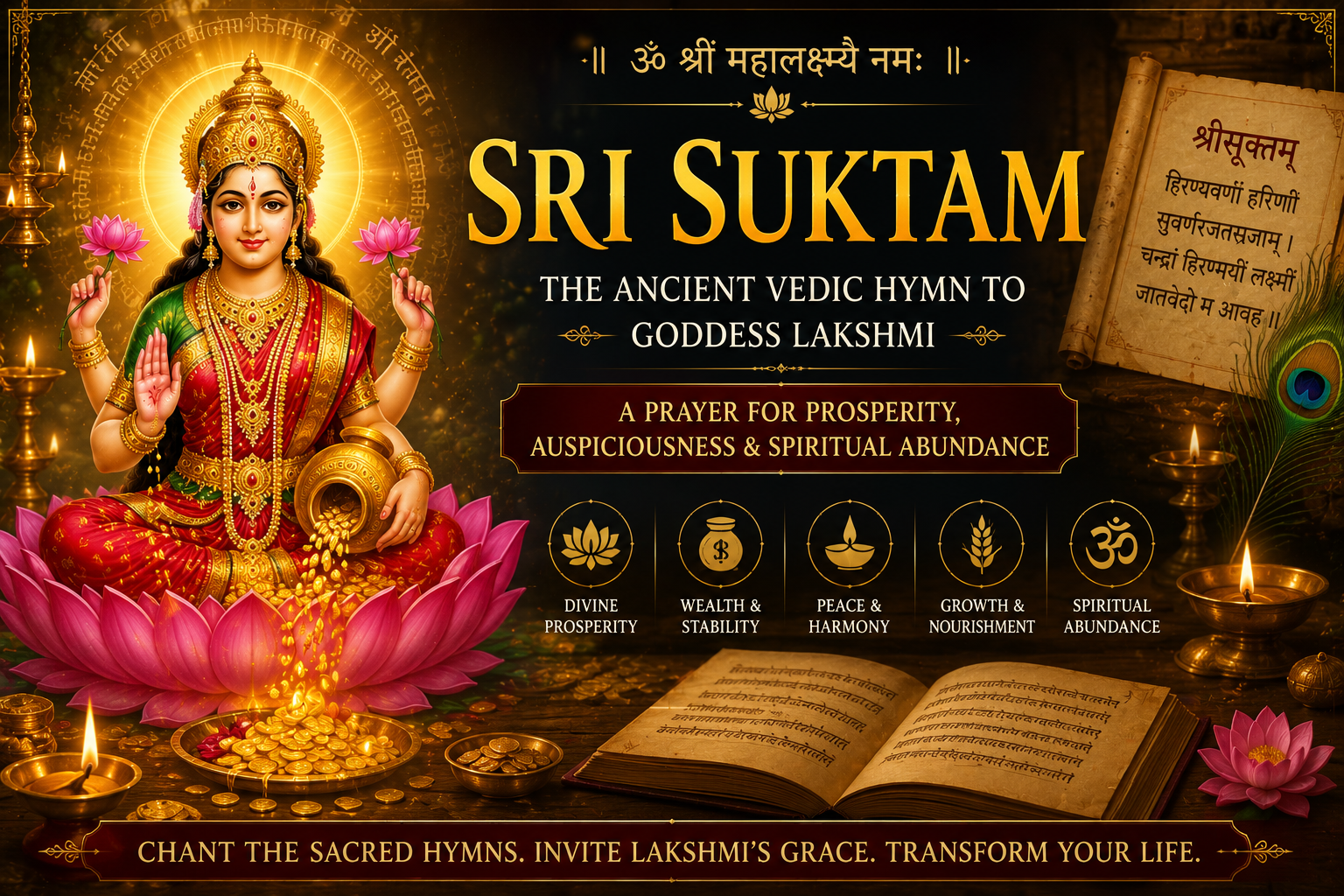
Among the most sacred hymns of the Vedic tradition, the Sri Suktam holds a special place in the worship of Goddess Lakshmi. Revered for centuries across temples, homes, and spiritual traditions, Sri Suktam is not merely a prayer for material wealth, but a profound invocation of divine abundance, harmony, purity, and spiritual prosperity.
Dedicated to Goddess Lakshmi — the embodiment of auspiciousness, beauty, nourishment, and fortune — Sri Suktam is widely recited during:
- Lakshmi Puja
- Diwali
- Friday worship
- Sri Vidya rituals
- Homams and Vedic ceremonies
Even today, millions chant Sri Suktam seeking:
- Prosperity and stability
- Removal of negativity and obstacles
- Peace and harmony in life
- Spiritual refinement and inner abundance
What is Sri Suktam?
Sri Suktam (also called Shri Suktam) is an ancient Vedic hymn associated with the Rig Veda Khila sections. It is considered one of the earliest surviving hymns dedicated to Goddess Lakshmi and remains central to Lakshmi worship traditions even today.
The hymn invokes Lakshmi through Agni (the sacred fire), following the Vedic ritual tradition where divine blessings are invited through sacred offerings and mantra recitation.
The verses describe Lakshmi as:
- Golden and radiant
- Seated on the lotus
- Surrounded by abundance and auspiciousness
- The source of prosperity, nourishment, and wellbeing
Ancient Vedic symbolism in Sri Suktam associates Lakshmi not only with material prosperity, but also with:
- Fertility
- Harmony
- Wisdom
- Spiritual refinement
- Cosmic order
The Deeper Meaning of Prosperity in Sri Suktam
Modern interpretations often reduce Sri Suktam to a “wealth mantra,” but traditional understanding is much broader.
In Vedic and Sri Vidya traditions, prosperity includes:
- Mental peace
- Stability
- Purity of speech and thought
- Family wellbeing
- Agricultural abundance
- Spiritual fulfillment
The hymn repeatedly contrasts Sri (auspiciousness) with Alakshmi (misfortune, disorder, instability, scarcity, and negativity).
Because of this, many practitioners regard Sri Suktam as:
A prayer for both external prosperity and inner harmony.
Several modern spiritual discussions and practitioners also emphasize that the hymn is deeply connected to sattvic abundance and removal of inner negativity rather than merely financial gain.
Symbolism Found in Sri Suktam
The hymn contains rich Vedic symbolism associated with the Divine Feminine.
Lotus (Padma)
Represents:
- Purity
- Spiritual growth
- Prosperity emerging from difficulty
Golden Radiance
Symbolizes:
- Divine brilliance
- Prosperity
- Spiritual illumination
Elephants and Horses
Represent:
- Royal authority
- Strength
- Fertility
- Abundance
Fragrance and Fertile Earth
Several verses associate Lakshmi with nourishment, fertility, agriculture, and sacred abundance connected with nature itself.
Sri Suktam and Spiritual Practice
Sri Suktam continues to be recited in:
- Temples
- Lakshmi homams
- Sri Vidya traditions
- Daily household worship
Traditional practices often include:
- Lighting a ghee lamp
- Offering lotus or yellow flowers
- Friday recitations
- Chanting during Diwali and Dhanteras
- Homa rituals with fire offerings
Many devotees believe that regular recitation helps cultivate:
- Positive energy
- Discipline
- Clarity of mind
- Emotional balance
- Prosperity with spiritual awareness
Sri Suktam in Temple Traditions
Sri Suktam is widely used in major Hindu temples and Vedic ritual traditions across India.
It forms part of:
- Lakshmi worship ceremonies
- Abhishekam rituals
- Vedic homams
- Tirupati temple traditions
- Sri Vidya Devi worship systems
The hymn remains one of the most important Vedic invocations associated with the Divine Mother.
Why Sri Suktam Remains Relevant Today
Even in the modern world, Sri Suktam continues to resonate because it presents prosperity in a holistic way.
The hymn teaches that true abundance includes:
- Stability
- Purity
- Peace
- Grace
- Inner richness
- Ethical prosperity
For many spiritual seekers, Sri Suktam represents:
The union of material wellbeing and spiritual consciousness.
Watch the Detailed Video Below
🎥 In the detailed video below, explore:
- The origin and history of Sri Suktam
- Meaning of the Vedic verses
- Symbolism connected with Lakshmi worship
- Spiritual significance of prosperity in Hindu traditions
- The concept of Sri and Alakshmi
- How Sri Suktam is practiced in temples and homes
- Why the hymn remains important in modern spiritual life
The video offers deeper insight into one of Hinduism’s most sacred and spiritually significant Vedic hymns.