Introduction
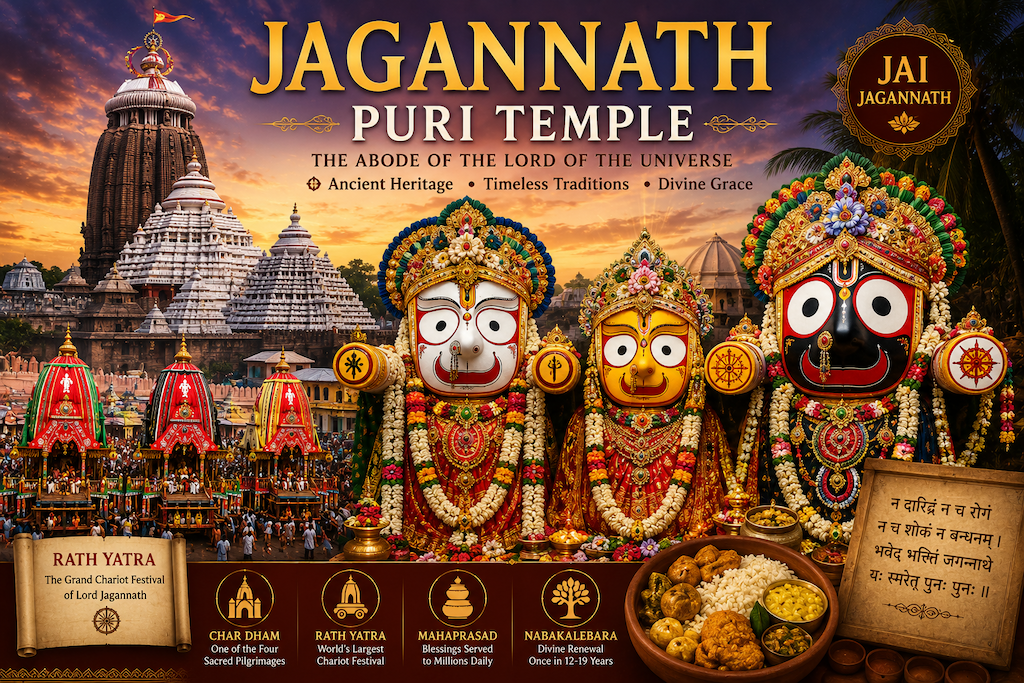
Standing majestically on the shores of the Bay of Bengal in Puri, Odisha, the Jagannath Temple is one of the holiest pilgrimage destinations in Hinduism. Revered as one of the Char Dham pilgrimage sites established in Hindu tradition, the temple is dedicated to Lord Jagannath, a form of Lord Vishnu widely identified with Lord Krishna, along with his elder brother Lord Balabhadra and sister Goddess Subhadra. The present temple, built in the 12th century by King Anantavarman Chodaganga Deva of the Eastern Ganga dynasty, has remained a vibrant center of devotion, art, and culture for over 800 years.
Every year, millions of devotees visit Puri to witness the world-famous Rath Yatra, participate in sacred rituals, and seek the blessings of the Lord of the Universe—Jagannath.
One of the most fascinating traditions associated with the Jagannath Temple is the sacred flag, known as the Patitapabana Bana, which flies atop the temple’s towering Shikhara. For centuries, it has been a symbol of Lord Jagannath’s divine presence and protection over the holy city of Puri.
Among devotees, there is a widely held belief that the temple flag appears to flutter against the direction of the prevailing wind. Visitors often observe the flag from different parts of the city and marvel at what they perceive to be this unusual movement, making it one of the many enduring mysteries associated with the temple.
Why is Lord Jagannath Unique?
The word Jagannath means “Lord of the Universe.”
Unlike most Hindu temples, the deities of Jagannath, Balabhadra, and Subhadra are carved from sacred neem wood (known as Daru Brahma) rather than stone or metal. Their distinctive large eyes and unfinished limbs symbolize the Lord’s universal nature, transcending conventional artistic forms. This wooden tradition is unique among major Hindu temples and is central to Jagannath worship.
The History of Jagannath Temple
The origins of Jagannath worship are linked to ancient traditions surrounding the deity Nilamadhava, worshipped by the tribal Sabara community. According to temple legends, King Indradyumna received divine guidance to establish a grand shrine for the Lord after the disappearance of Nilamadhava. The present temple was later constructed in the 12th century by King Anantavarman Chodaganga Deva, with subsequent additions by later rulers.
Built in the classic Kalinga style of architecture, the main temple rises approximately 65 metres above the surrounding city and is enclosed by two massive concentric walls.
The Presiding Deities
The sanctum houses four sacred wooden deities:
- Lord Jagannath – The Lord of the Universe, identified with Lord Krishna/Vishnu.
- Lord Balabhadra – Elder brother of Jagannath, representing strength and righteousness.
- Goddess Subhadra – Sister of Jagannath and Balabhadra, symbolizing divine compassion and auspiciousness.
- Sudarshana Chakra – Worshipped as a sacred deity alongside the three principal deities.
Together, they are seated upon the Ratna Simhasana (Jeweled Throne), one of the most revered seats in Hindu temple tradition.
Rath Yatra: The World’s Largest Chariot Festival
The annual Rath Yatra is the most celebrated festival of Jagannath Temple and one of the largest religious gatherings in the world.
During the festival:
- Lord Jagannath, Balabhadra, and Subhadra are ceremonially brought out of the temple.
- Each deity is placed on a newly constructed wooden chariot.
- Thousands of devotees pull the chariots along the Grand Road (Bada Danda) to the Gundicha Temple, where the deities stay for several days before returning during the Bahuda Yatra.
A unique ritual during the festival is Chhera Pahanra, in which the Gajapati King of Puri sweeps the chariots with a golden broom, symbolizing that all are equal before the Lord.
Nabakalebara: The Sacred Renewal of the Deities
One of the most extraordinary traditions associated with Jagannath Temple is Nabakalebara, meaning “new body.”
Performed only in specific years when an additional lunar month (Adhika Ashadha) occurs, this ceremony involves:
- Searching for sacred neem trees using traditional scriptural criteria.
- Carving new wooden idols.
- Transferring the sacred essence (Brahma Padartha, according to temple tradition) from the old deities to the new ones in a highly confidential ritual.
- Reverently interring the old idols within the temple complex.
For devotees, Nabakalebara symbolizes the eternal nature of the soul and the changing nature of the physical body.
Mahaprasad: The Sacred Food of Jagannath
The temple’s Mahaprasad is one of its most cherished traditions.
Prepared daily in earthen pots using traditional methods, it is offered to the deities before being distributed to devotees. The Mahaprasad is served in the famous Ananda Bazaar, where people from all backgrounds share meals together, reflecting the inclusive spirit of Jagannath worship.
Fascinating Facts About Jagannath Temple
Some of the temple’s most remarkable features include:
- One of the four sacred Char Dham pilgrimage sites.
- Over 100 festivals are observed annually.
- The temple remains one of the greatest examples of Kalinga architecture.
- The deities are carved from sacred wood and periodically renewed through Nabakalebara.
- The Rath Yatra allows devotees who cannot enter the temple to receive the Lord’s darshan outside its walls.
Other Important Jagannath Temples
While Puri is the foremost center of Jagannath worship, several other temples dedicated to Lord Jagannath are of great religious significance.
Jagannath Temple, Ahmedabad (Gujarat)
Famous for its annual Rath Yatra, one of the oldest and largest outside Odisha.
Jagannath Temple, Hauz Khas, Delhi
A prominent center for the Odia community in northern India.
Jagannath Temple, Hyderabad (Telangana)
Known for its beautiful red sandstone architecture and annual Rath Yatra.
Jagannath Temple, Digha (West Bengal)
A recently developed temple inspired by the architecture and traditions of Puri, attracting growing numbers of pilgrims.
Jagannath Temples Across India and Abroad
Jagannath worship has spread worldwide through devotional communities, with temples in countries including the United States, the United Kingdom, Australia, Mauritius, and Singapore.
Best Time to Visit Puri
The temple welcomes devotees throughout the year, but the most popular occasions include:
- Rath Yatra (June–July)
- Snana Yatra
- Chandan Yatra
- Kartik month celebrations
- Makar Sankranti
Each festival offers a unique glimpse into the vibrant living traditions of Jagannath worship.
Frequently Asked Questions
Why is Jagannath Temple one of the Char Dham?
It is regarded as one of Hinduism’s four principal pilgrimage destinations, representing the eastern direction of the sacred Char Dham circuit.
Why are the Jagannath idols made of wood?
Temple tradition holds that the deities are carved from sacred neem wood and periodically renewed through the Nabakalebara ritual, symbolizing the eternal soul taking on a new body.
What is the significance of Rath Yatra?
Rath Yatra represents the Lord’s journey outside the temple to bless all devotees, emphasizing inclusiveness and universal accessibility to divine grace.
Can non-Hindus enter the temple?
Access to the inner temple is restricted according to the temple’s longstanding customs. However, visitors of all backgrounds can experience the Rath Yatra and view the temple from nearby vantage points.
Related Posts
The Sixty-Four (64) Yoginis: Iconography, Symbolism, and Tantric Invocations
Facebook Share on X LinkedIn WhatsApp Email Copy Link The Chausath Yogini tradition represents one [...]
Pancha Bhoota Temples: The Five Elemental Abodes of Shiva
Facebook Share on X LinkedIn WhatsApp Email Copy Link Introduction In Hindu philosophy, the entire [...]
Vaitheeswaran Koil Temple: History, Healing Powers, Siddhamirtham Tank & Nadi Astrology
Facebook Share on X LinkedIn WhatsApp Email Copy Link Introduction Located in Tamil Nadu’s Mayiladuthurai [...]