Introduction
Long before many of the classical forms of the Hindu Goddess became widely established across the Indian subcontinent, the ancient Tamil landscape worshipped a fierce and protective deity known as Korravai. She was revered as the goddess of victory, war, fertility, and the wilderness, and her presence permeated early Tamil literature, ritual life, and battlefield traditions.
For centuries, Korravai was invoked by warriors seeking victory, farmers seeking prosperity, and communities seeking protection. Yet today, despite her once central place in Tamil spiritual culture, the independent worship of Korravai has largely faded, absorbed into later forms of the Goddess such as Durga and Parvati.
Understanding Korravai offers a glimpse into one of the oldest layers of goddess worship in South Asia.
Origins in the Sangam Age
The earliest references to Korravai appear in the Sangam literature (circa 300 BCE – 300 CE), which preserves the poetic and cultural traditions of ancient Tamil society.
In the classical Tamil ecological classification known as Tinai (Tamil landscape classification), each landscape had its own presiding deity. Korravai was associated with the Palai (arid or desert landscape), the domain of warriors, hunters, and travelers.
In these texts, she appears as:
- A fierce mother goddess of victory
- Protector of warriors returning from battle
- A deity pleased with heroic sacrifice and martial courage
The Tamil epic Silappatikaram also describes rituals dedicated to Korravai, particularly victory dances performed after battles.
The Warrior Goddess
Korravai’s primary identity was that of a war goddess.
Ancient Tamil warriors prayed to her before battle, and victory celebrations often included ritual dances and offeringsdedicated to her.
Characteristics attributed to Korravai include:
- Goddess of victory and conquest
- Patron deity of warriors and hunters
- Associated with blood sacrifice and martial rituals
- Protector of tribal clans and frontier settlements
Her imagery often depicts her:
- Standing or dancing
- Accompanied by wild animals such as tigers
- Holding weapons
These features later became strongly associated with Durga, suggesting a theological merging over time.
Korravai and Fertility
While she was primarily a war goddess, Korravai also had a fertility aspect, making her important for agricultural communities.
Farmers worshipped her to ensure:
- Good harvests
- Protection from drought
- Fertility of the land
Thus she functioned as both destroyer and nurturer, embodying the dual nature of the Divine Feminine.
Transformation Over Time
By the early medieval period, the independent cult of Korravai began to change.
Several developments contributed to this transformation:
1. Integration into Sanskritic Traditions
As temple-based Hinduism expanded, local deities were often identified with pan-Indian forms of the Goddess.
Korravai gradually became identified with:
- Durga
- Kali
- Parvati
2. Rise of Temple-Centered Worship
Early Tamil religion included many open-air shrines and sacred groves, but later temple traditions favored established Puranic forms of deities.
3. Political Patronage
Medieval dynasties such as the Chola dynasty, Pandya dynasty, and Pallava dynasty increasingly promoted Sanskritic temple traditions, accelerating the assimilation of regional deities.
Over time, Korravai became understood as an early Tamil form of Durga.
Korravai in Temple Art
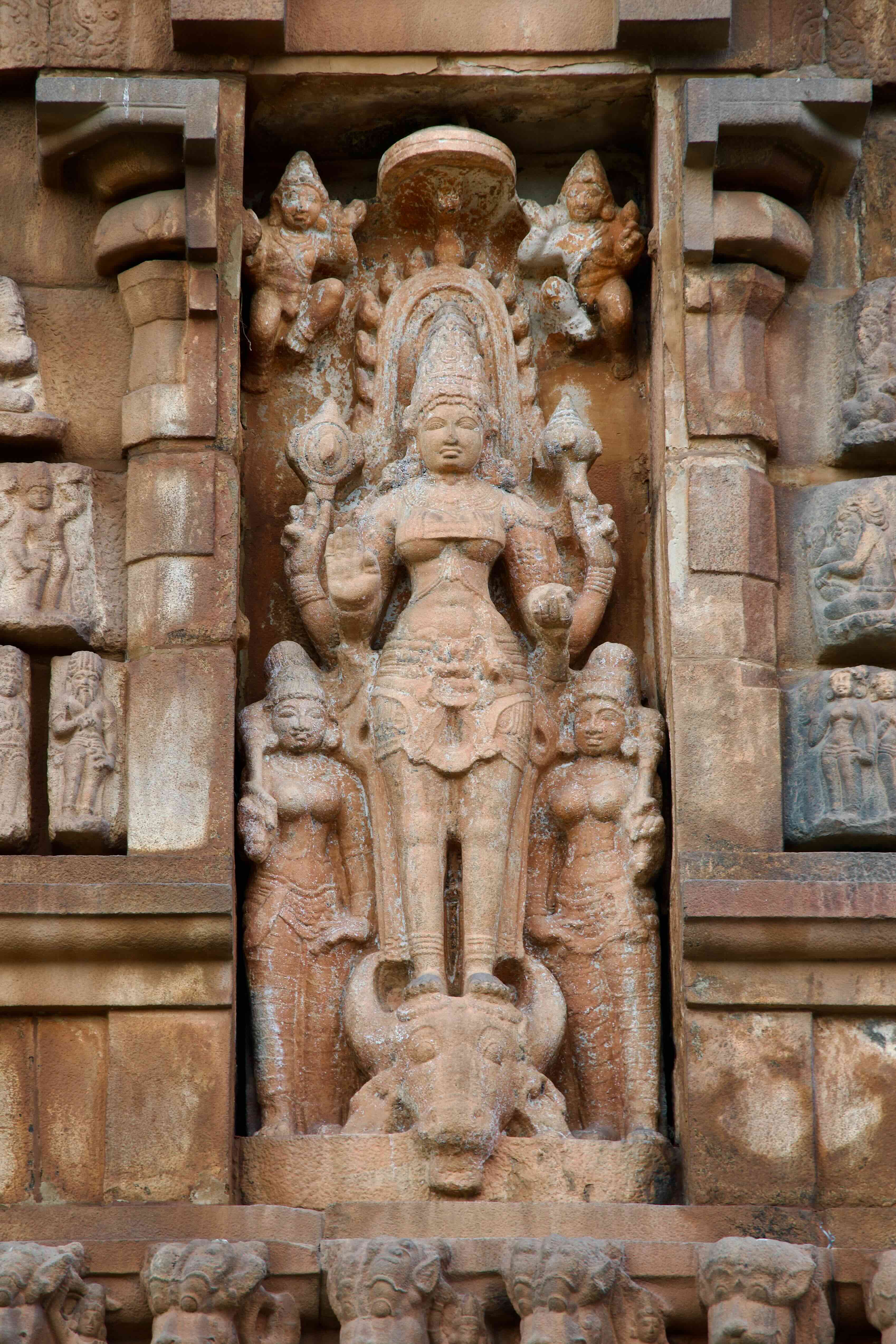
Even though her independent worship declined, Korravai survives in temple sculpture and iconography.
One famous example appears in the rock-cut monuments of Mahabalipuram, where reliefs show a warrior goddess believed to represent Korravai.
In these depictions she often appears:
- Standing triumphantly
- Accompanied by devotees or warriors
- Linked with themes of victory and sacrifice
Places Where Korravai Can Still Be Found Today
Although temples dedicated solely to Korravai are rare today, traces of her worship survive in several places in South India.
Mahabalipuram
- Mahabalipuram
- Relief sculptures believed to depict Korravai.
Village Guardian Shrines
In rural Tamil Nadu, Korravai’s spirit survives in Amman temples, where local mother goddesses retain similar characteristics.
Examples include:
- Mariamman shrines
- Kaliamman temples
These goddesses often preserve aspects of ancient Tamil mother-goddess traditions.
Durga Temples
Some temples dedicated to Durga in Tamil Nadu incorporate iconographic elements originally associated with Korravai.
Cultural Legacy
Even if the name Korravai is less commonly heard today, her legacy remains deeply embedded in Tamil culture.
Her influence survives in:
- Temple iconography
- Village goddess traditions
- Tamil literature
- Folk rituals and festivals
Many scholars consider Korravai to be one of the earliest identifiable warrior goddesses of the Indian subcontinent, representing a powerful indigenous tradition that later merged with broader Hindu theology.
Conclusion
The story of Korravai is the story of how local traditions evolve over time. Once the fierce guardian of warriors and protector of the land, she gradually merged with the wider pantheon of Hindu goddesses.
Yet traces of her ancient presence remain—in literature, temple carvings, and the living traditions of village goddess worship across Tamil Nadu.
Rediscovering Korravai allows us to reconnect with a forgotten chapter of the sacred feminine in South Asian history.