Introduction
Across the villages, towns, and temple cities of South India, one goddess continues to command deep emotional devotion among ordinary people — Mariamman, the compassionate yet powerful Mother who protects communities from disease, drought, and misfortune.
Unlike many classical deities whose worship emerged from Sanskritic traditions, Mariamman belongs to the ancient Dravidian folk religious tradition, where the divine mother was worshipped as a direct guardian of land, fertility, and public health. Over centuries, she evolved into one of the most widely revered village goddesses, especially in Tamil Nadu, Karnataka, Andhra Pradesh, and Sri Lanka.
Origin of the Name
The name Mariamman is rich in meaning:
- “Mari” in Tamil can mean rain, symbolizing her power over monsoons and agricultural prosperity.
- It can also mean change or transformation, reflecting her ability to alter fate.
- “Amman” means Mother Goddess.
Thus, Mariamman is understood as the Mother who brings rain, transformation, and renewal of life.
Historical Roots
Mariamman’s worship predates large temple-based Hinduism and is linked to:
1. Ancient Village Mother Cults
Early agrarian societies worshipped female deities associated with:
- Fertility of land
- Protection from epidemics
- Seasonal cycles
- Boundary protection of settlements
These goddesses were often worshipped in sacred groves, not large temples.
2. Goddess of Epidemics and Healing
Historically, Mariamman became closely associated with protection against:
- Smallpox
- Measles
- Chickenpox
- Heat-borne diseases
Before modern medicine, villagers believed outbreaks were manifestations of the goddess’s anger, and rituals were performed to cool and appease her.
Because of this, she became known as:
The Divine Healer who both causes and cures disease
Integration into Mainstream Hinduism
Over time, local mother goddesses were identified with classical forms of Shakti, the supreme feminine power in Hindu theology.
Mariamman is often considered a regional manifestation of:
- Parvati
- Durga
- Kali
However, her worship remains deeply rooted in folk rituals rather than Vedic temple traditions, preserving her unique identity.
Why Mariamman is Worshipped
🌧️ 1. Goddess of Rain and Agriculture
In agrarian communities, rainfall determines survival. Mariamman is invoked to:
- Bring timely monsoons
- Prevent drought
- Protect crops from pestilence
🛡️ 2. Protector from Disease
She is especially worshipped during epidemics. Devotees seek:
- Relief from illness
- Protection of children
- Community health
🔥 3. Fierce but Compassionate Mother
Like many mother goddesses, Mariamman has dual aspects:
| Fierce Form | Benevolent Form |
|---|---|
| Punishes wrongdoing | Protects devotees |
| Associated with heat, fever | Associated with cooling rain |
| Symbol of divine anger | Symbol of maternal care |
Iconography and Symbols
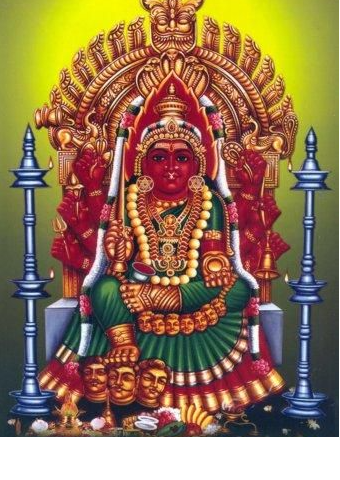
Mariamman’s form varies regionally but often includes:
- Seated or standing posture
- Weapons such as trident or sword
- Pot of sacred water
- Sometimes depicted with multiple arms
- Crowned and richly adorned
Symbols associated with her include:
- Neem leaves — believed to have medicinal properties
- Lemons — protection from evil
- Red sari — energy and divine power
- Fire-walking rituals — devotion and purification
Major Festivals
Mariamman festivals are vibrant community events marked by intense devotion.
Fire-Walking Rituals
Devotees walk barefoot across burning embers seeking blessings and healing.
Water & Cooling Rituals
To pacify the goddess’s “heat,” rituals include:
- Pouring water
- Offering buttermilk
- Decorating with neem leaves
Community Celebrations
Festivals include:
- Folk music and dance
- Processions of decorated idols
- Offerings of pongal and flowers
Prominent Mariamman Temples
Some important temples dedicated to Mariamman include:
- Samayapuram Mariamman Temple
- Mookambika Temple (associated regionally)
- Bannari Amman Temple
- Punnainallur Mariamman Temple
These temples attract millions of devotees annually.
Mariamman in Folk Culture
Mariamman remains deeply connected to rural identity and local traditions:
- Folk songs praise her healing powers
- Oral legends describe miracles
- Village dramas reenact myths of her protection
- Women play central roles in her rituals
Her worship is community-centered, emphasizing collective wellbeing over individual salvation.
Social and Cultural Significance
Mariamman represents:
- Indigenous Dravidian spirituality
- Feminine power connected to nature
- Pre-modern public health belief systems
- Survival of folk traditions amid urbanization
She bridges the gap between ancient animistic traditions and organized Hindu religion.
Tantric Dimensions of Mariamman Worship
While Mariamman is widely revered as a village guardian and healer, several traditions — especially in rural Tamil regions — preserve Tantric elements within her worship. These practices reflect older layers of Shakta spirituality where the Divine Mother is invoked through ritual power, elemental forces, and esoteric rites.
Mariamman’s fierce and transformative nature makes her closely aligned with Tantric Shaktism, where the goddess is not only a benevolent mother but also a wielder of cosmic energy capable of both destruction and healing.
Mariamman as a Form of Shakti
In Tantric theology, the Goddess is understood as primordial energy (Shakti) manifesting in multiple localized forms. Mariamman is regarded as:
- A Gramadevata (village tutelary deity) embodying localized Shakti
- A guardian of territorial boundaries and energetic fields
- A deity controlling elemental forces — especially heat, disease, and rain
Her association with fever and heat-based illnesses reflects the Tantric symbolism of tapas (inner heat), transformation, and karmic purification.
Folk Tantra vs Classical Tantra
Mariamman worship reflects Folk Tantra, which differs from classical Sanskritic Tantra in form but not in spiritual intent.
| Folk Tantric Features | Classical Tantric Features |
|---|---|
| Oral rituals passed through communities | Text-based rituals from Agamas & Tantras |
| Non-Brahmin priesthood | Initiated Tantric practitioners |
| Use of local symbols and natural elements | Use of yantras, mandalas, bija mantras |
| Community-centered rites | Individual esoteric sadhana |
Despite differences, both systems seek to invoke divine feminine energy for protection, healing, and spiritual power.
Tantric Ritual Elements in Mariamman Worship
🔥 Fire Rituals
Fire-walking and fire offerings symbolize:
- Purification through heat
- Appeasement of the goddess’s fiery aspect
- Devotees demonstrating surrender and devotion
These mirror Tantric concepts where fire represents transformative cosmic energy.
🌿 Use of Sacred Plants
- Neem leaves, widely used in Mariamman rituals, have medicinal and symbolic significance.
- In Tantric symbolism, neem represents purification and protection from malevolent forces.
🩸 Blood Offerings (Historical Practice)
Some older traditions included animal sacrifice — a feature seen in certain Tantric rituals symbolizing:
- Offering of life-force energy
- Removal of negative karmic forces
- Appeasement of fierce deities
Modern practice has largely replaced this with symbolic offerings.
🧿 Protective Magic & Boundary Rituals
Village priests conduct rituals to:
- Protect settlements from epidemics
- Neutralize negative energies
- Safeguard crops and cattle
These rites reflect Tantric principles of energetic protection (raksha) and spatial sanctification.
Mantras and Invocation Practices
Unlike Vedic deities, Mariamman’s mantras are often:
- Region-specific
- Passed orally
- Sung as devotional chants
Some Tantric practitioners invoke her using bija (seed) syllables associated with Shakti worship, linking her to broader Tantric goddess traditions.
Mariamman and the Fierce Goddess Tradition
Mariamman shares strong symbolic parallels with fierce Tantric goddesses such as:
- Kali — goddess of transformation and dissolution
- Durga — warrior protector of cosmic order
- Bhadrakali — regional fierce mother goddess
Like them, Mariamman embodies the paradox of the Divine Feminine:
She destroys impurity but nurtures devotees
She brings disease but also cures it
She is feared as power yet loved as mother
This duality is central to Tantric goddess philosophy.
Sacred Geography and Power Spots
Many Mariamman shrines are located in:
- Forest edges
- Village boundaries
- Near water sources
- Sacred groves
Tantric traditions recognize such locations as energy nodes where spiritual forces are concentrated and rituals become more potent.
Living Tantric Traditions Today
In parts of rural South India:
- Night-long rituals
- Trance or possession ceremonies
- Oracular practices
- Devotional austerities
continue to reflect Tantric elements where the goddess is experienced as a living, embodied force rather than an abstract deity.
Conclusion
Mariamman is more than a goddess — she is the living embodiment of motherhood, protection, healing, and the rhythms of nature. Her worship reflects humanity’s deep connection with environment, health, and communal faith.
Though rooted in ancient village traditions, Mariamman continues to be one of the most emotionally powerful and widely worshipped goddesses of South India today.
Related Posts
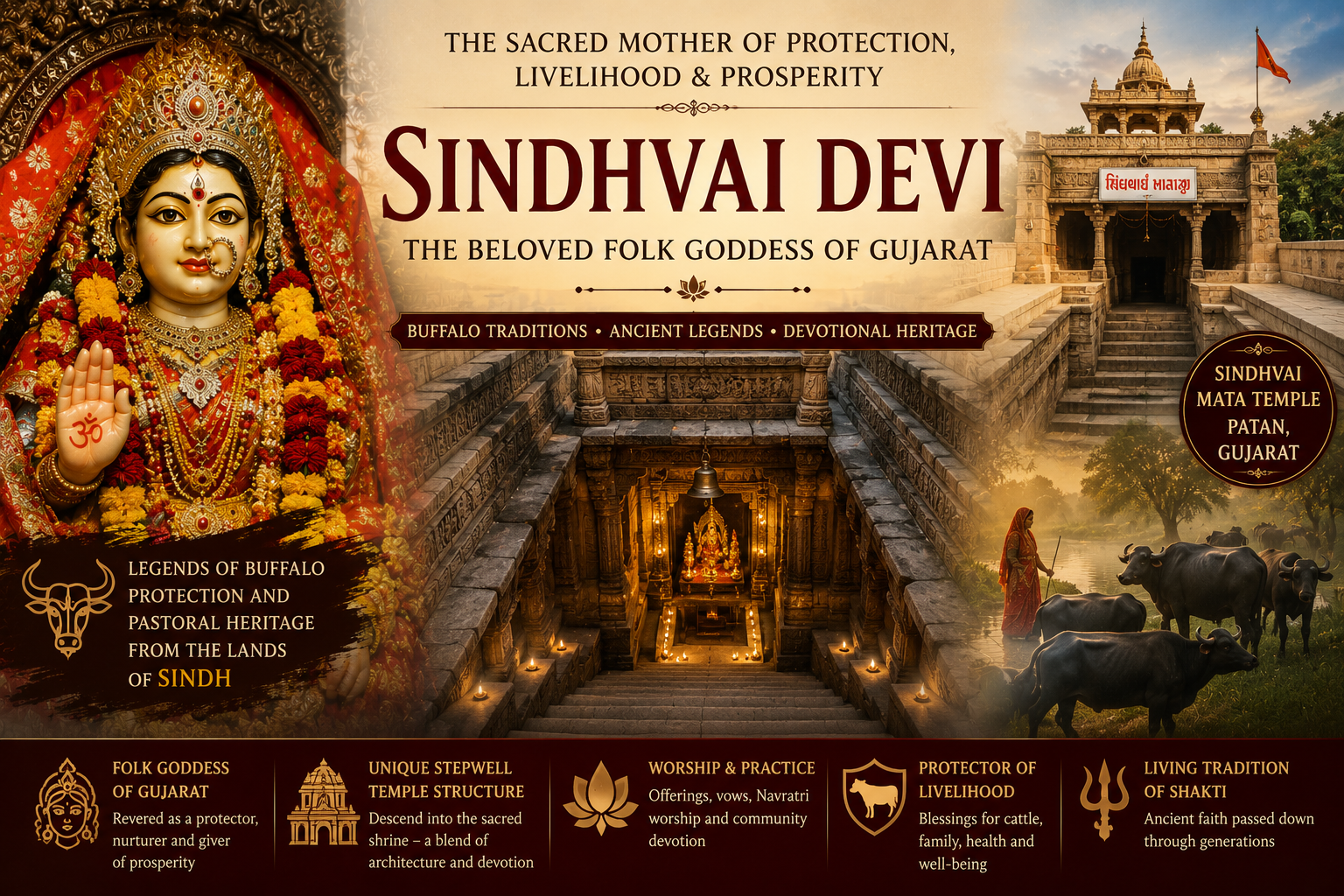
Sindhvai Devi: The Sacred Mother Goddess of Gujarat, Pastoral Traditions & Ancient Folk Worship
Facebook Share on X LinkedIn WhatsApp Email Copy Link Introduction Among the deeply revered folk [...]
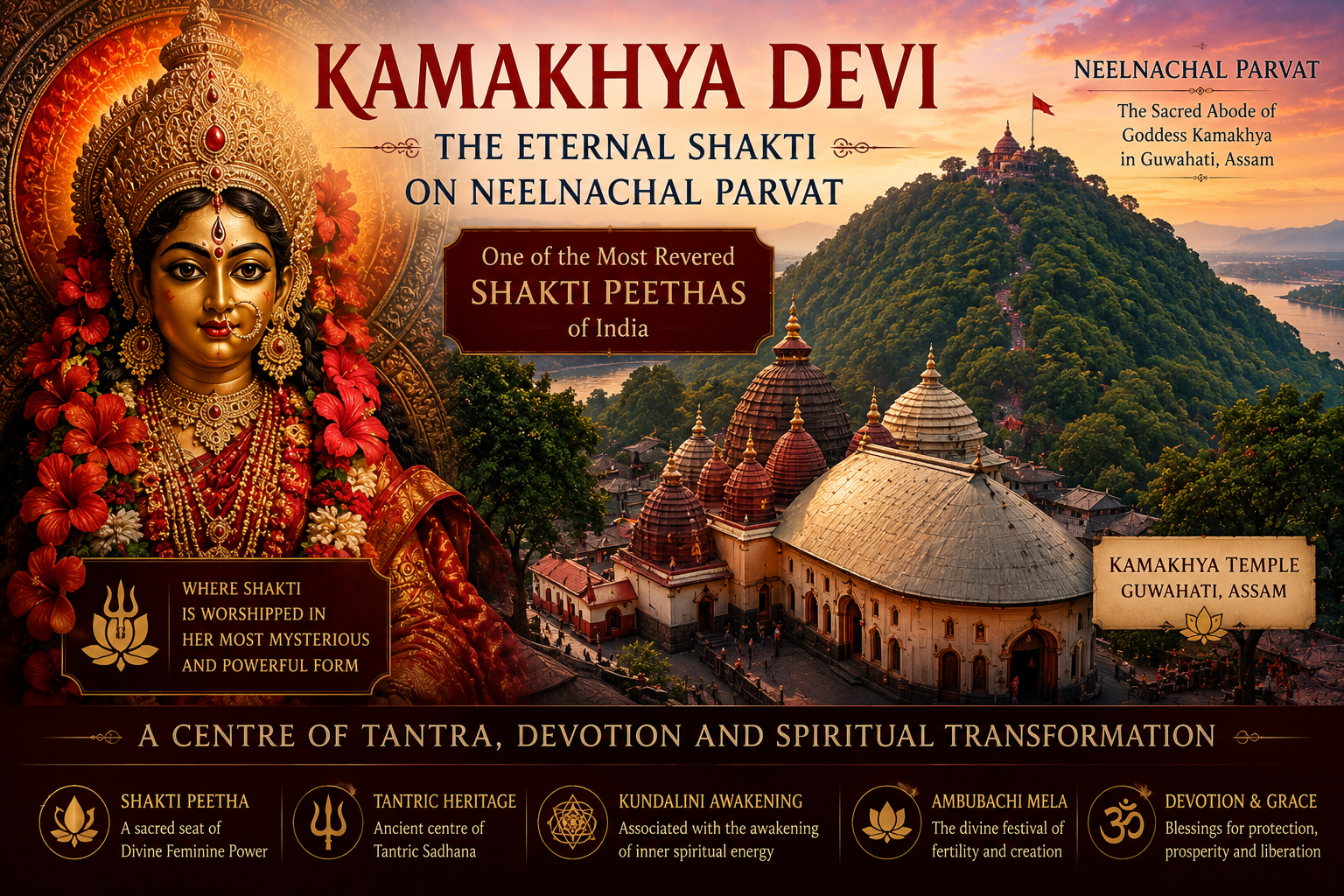
Kamakhya Devi: The Sacred Shakti Peetha of Guwahati and the Heart of Tantric Worship
Facebook Share on X LinkedIn WhatsApp Email Copy Link Introduction Perched atop the Nilachal Hills [...]