Introduction
The spiritual identity of the temple is deeply rooted in devotional offerings and symbolic rituals, especially the tradition of offering coconuts in large numbers and presenting terracotta horse idols to Maa Tarini. These practices reflect a blend of tribal faith, Shakti worship, and folk traditions that have evolved over centuries.
🥥 Coconut Offering (Mass Devotion Ritual)
Why Coconuts Are Offered in Large Numbers
At Tarini Temple, coconuts are not just offerings — they represent collective faith and surrender.
Spiritual Symbolism:
- The hard shell represents ego and worldly attachments
- Breaking or offering it symbolizes submission to the divine will
- The white kernel signifies purity of heart and intention
Unique Practice: Record-Scale Offerings
During peak days and festivals:
- Thousands of coconuts are offered in a single day
- Devotees bring coconuts as part of:
- Wish fulfillment (mannat)
- Gratitude offerings
- Family rituals
What Makes It Unique:
- The scale of offering is unusually large compared to most temples
- It reflects community participation rather than individual worship alone
Ritual Procedure (At the Temple)
- Devotee purchases or brings a coconut
- Offers it at the designated area
- Makes a silent prayer to Maa Tarini
- Coconut is either:
- Broken
- Deposited as offering
🐎 Horse Idol Offering (Terracotta Tradition)
What Are These Horse Idols?
Devotees offer terracotta or wooden horse idols to the goddess.
Symbolic Meaning
The horse represents:
- Speed in fulfilling wishes
- Devotion reaching the divine quickly
- A vehicle carrying prayers to Maa Tarini
In tribal belief systems, the horse is also seen as:
- A messenger between human and divine realms
- A symbol of strength and protection
Why Devotees Offer Horse Idols
People offer horse idols when:
- A wish is fulfilled
- Seeking success in:
- Business
- Travel
- Personal challenges
It is often a return offering, symbolizing gratitude.
Visual Impact
The temple surroundings often feature:
- Rows of horse idols
- Different sizes — from small tokens to large statues
This creates a unique devotional landscape, rarely seen in mainstream temples.
🙏 Other Important Rituals
🔴 Sindoor (Vermilion) Offering
- Devotees apply vermilion to the goddess
- Symbolizes:
- Shakti (divine feminine energy)
- Protection and auspiciousness
🪔 Deepam (Lamp Offering)
- Lighting lamps represents:
- Removal of darkness (ignorance)
- Invocation of divine energy
🎁 Votive Offerings (Mannat Tradition)
- Devotees promise offerings if wishes are fulfilled
- Common offerings:
- Coconuts
- Horse idols
- Sarees or ornaments
📅 Special Days & Festivals
🌸 Chaitra Mela (Most Important Festival)
- Held during March–April
- Attracts lakhs of devotees
- Massive coconut offerings take place
- Cultural fairs and rituals conducted
🔱 Durga Puja & Navratri
- Celebrates Maa Tarini as a form of Durga
- Special rituals, decorations, and prayers
🗓️ Tuesdays & Saturdays
- Considered highly auspicious days
- Large crowds gather for:
- Coconut offerings
- Vow fulfillment
🌿 Cultural Significance
The rituals at Tarini Temple highlight:
- Strong influence of tribal worship traditions
- Integration with Shakta (goddess) practices
- Emphasis on simple, accessible devotion
Unlike elaborate Vedic rituals, these practices are:
- Direct
- Symbolic
- Community-driven
🧠 Deeper Interpretation
Together, the coconut and horse offerings represent:
| Offering | Meaning |
|---|---|
| Coconut | Inner surrender and purification |
| Horse Idol | Movement of prayers toward fulfillment |
This creates a powerful message:
Faith begins with surrender and moves toward realization through devotion.
🗺️ Location and How to Reach
📍 Location
- Ghatgaon, Kendujhar district, Odisha
🚆 By Train
- Nearest major station: Kendujhar Road (Jajpur Keonjhar Road)
- Trains passing near Ghatgaon slow down for the coconut ritual
🚗 By Road
- Well connected from:
- Bhubaneswar (~200 km)
- Cuttack
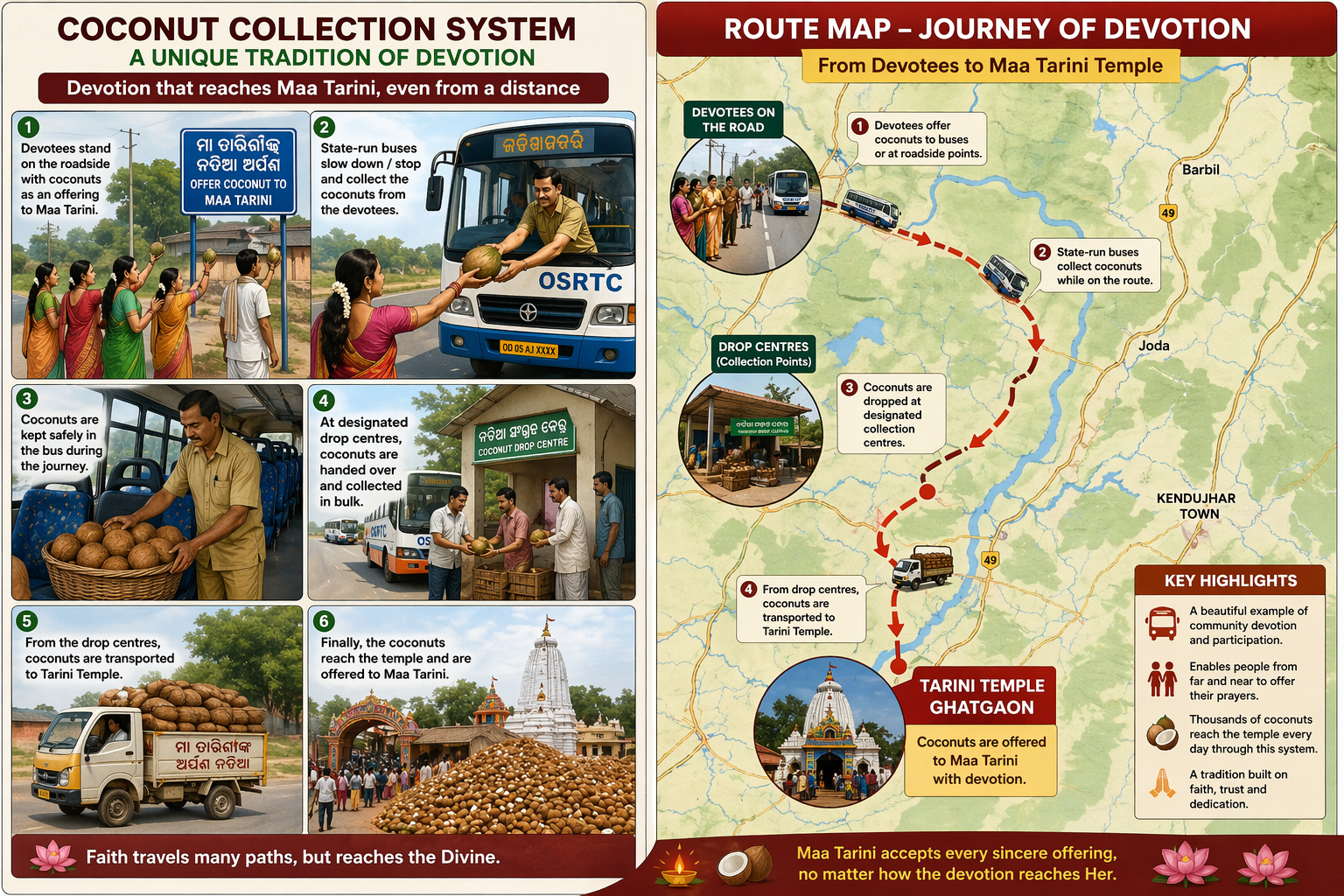
🚌 Community Devotion: Coconut Collection Through Public Transport
One of the most remarkable aspects of worship at Tarini Temple is how devotion extends beyond the temple premises into daily public life.
🥥 Coconut Offering Without Visiting the Temple
For devotees who are unable to visit the temple in person, a unique system has evolved:
- People stand along roads carrying coconuts meant for Maa Tarini
- As state-run buses pass by, they briefly halt or slow down
- Devotees hand over coconuts to bus staff or place them in designated collection points
🚏 Role of Bus Services and Drop Centres
This informal yet widely practiced system operates through:
🚌 Public Transport Participation
- Buses traveling toward Ghatgaon often collect coconuts en route
- Conductors or helpers assist in gathering these offerings
📦 Drop Collection Points
- Certain roadside locations function as collection centers
- Devotees leave coconuts here if direct handover is not possible
🛕 Final Delivery to the Temple
- The collected coconuts are eventually transported to the temple
- They are included in the daily offerings made to the goddess
⏰ Best Time to Visit
- October to March — pleasant weather
- Festival periods for vibrant cultural experience
🌟 Spiritual Significance
The Tarini Temple stands out because:
- It blends tribal traditions with mainstream Hinduism
- It offers a unique form of remote devotion (train ritual)
- It represents faith beyond physical boundaries
For many devotees, even a brief moment of prayer from a passing train is enough to feel connected to the divine.
📊 Quick Facts
| Aspect | Details |
|---|---|
| Deity | Maa Tarini (form of Durga) |
| Location | Ghatgaon, Odisha |
| Famous For | Coconut offering from trains |
| Key Belief | Wish fulfillment & protection |
| Major Festival | Chaitra Mela |
Conclusion
The rituals of Tarini Temple go beyond conventional worship. They represent a living tradition where devotion is expressed through simple yet powerful symbols — coconuts and horse idols.
These practices continue to attract devotees not just for blessings, but for a deeper connection with the divine rooted in faith, gratitude, and cultural heritage.
Whether visited in person or remembered in passing, Maa Tarini continues to inspire devotion, hope, and spiritual connection among millions.
Related Posts
Jagannath Puri Temple: History, Mysteries, Rath Yatra, Nabakalebara & Complete Pilgrim’s Guide
Facebook Share on X LinkedIn WhatsApp Email Copy Link Introduction Standing majestically on the shores [...]
Kubjika Devi: The Hidden Goddess of Tantra, Kundalini & the Protection of Nepal’s Malla Dynasty
Facebook Share on X LinkedIn WhatsApp Email Copy Link Introduction Among the lesser-known yet profoundly [...]