Introduction
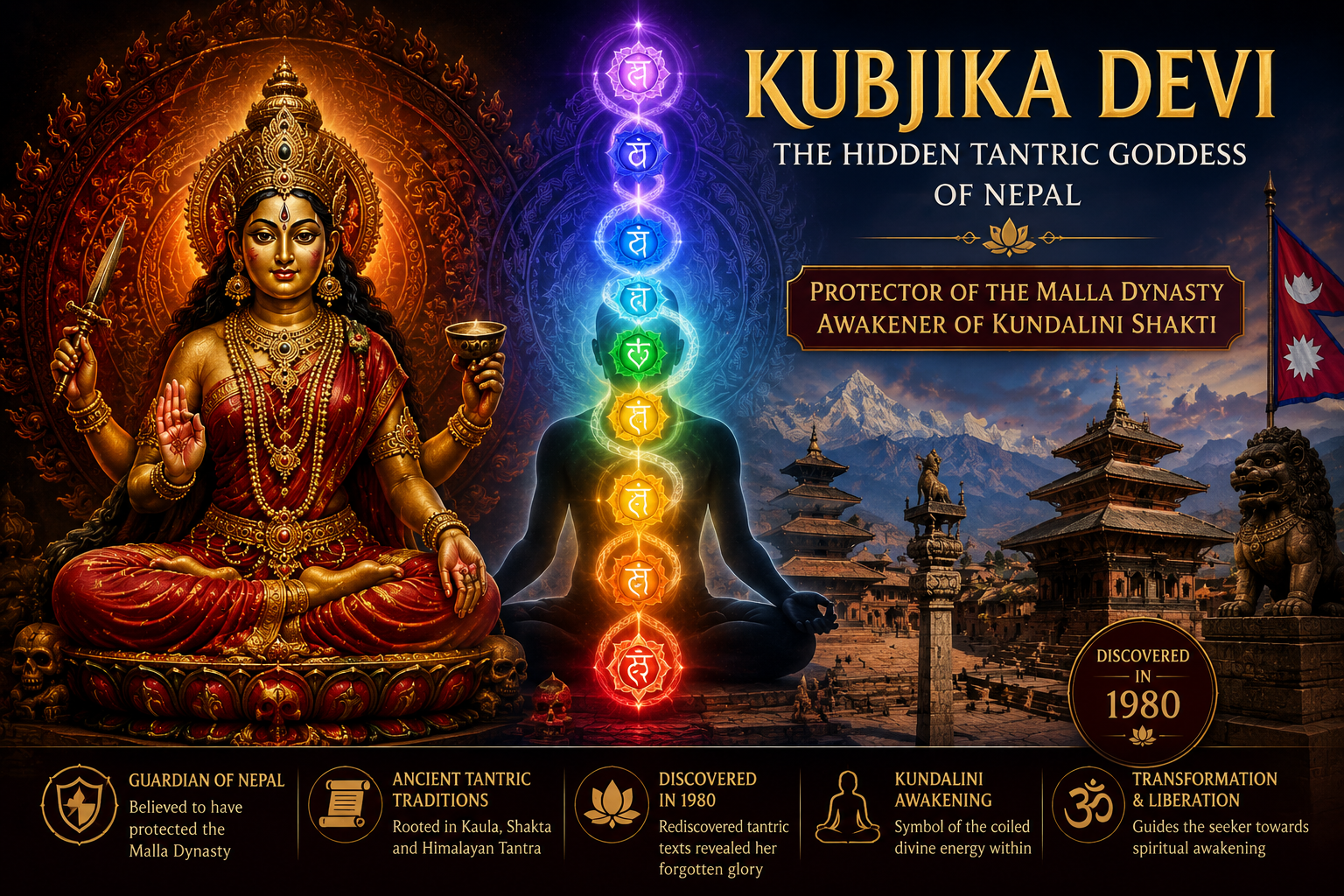
Among the lesser-known yet profoundly powerful goddesses of tantric traditions, Kubjika Devi occupies a unique and mysterious place in the spiritual history of the Himalayas and Nepal. Revered in esoteric Shaiva and Shakta traditions, Kubjika is associated with kundalini awakening, hidden spiritual energy, and divine protection.
For centuries, she remained a secretive deity known primarily within tantric lineages and initiatory traditions. Scholars and practitioners later brought renewed attention to her worship traditions during the late 20th century, leading to wider recognition of the Kubjika tradition and its importance in Himalayan spirituality.
Kubjika is especially connected with:
- Kundalini Shakti and inner awakening
- Tantric mantra and yogic practices
- Sacred protection traditions in Nepal
- Hidden streams of Kaula and Shakta worship
Kubjika and the Malla Dynasty of Nepal
Historical and tantric traditions connect Kubjika Devi with the spiritual protection of the Malla dynasty, the rulers who governed large parts of medieval Nepal and were known for their patronage of temples, tantra, art, and sacred rituals.
In Nepalese tantric traditions, Kubjika was regarded as:
- A guardian deity of sacred power
- A protector of kingdoms and spiritual centers
- A hidden force behind tantric royal traditions
The Malla kings were deeply associated with:
- Devi worship
- Tantric rituals
- Temple-based spiritual practices
Many researchers believe that Kubjika worship formed part of the esoteric spiritual culture preserved within Nepal’s sacred traditions.
Rediscovery and Scholarly Attention in the 20th Century
Although the Kubjika tradition existed for centuries, it gained wider academic and spiritual attention during the late 20th century when previously lesser-known tantric manuscripts and teachings began to be studied more extensively.
The rediscovery and documentation of Kubjika-related texts helped reveal:
- Ancient tantric practices connected to kundalini
- Hidden Himalayan Shakta traditions
- The philosophical depth of Kubjika worship
This brought Kubjika from relative obscurity into discussions among:
- Tantra scholars
- Spiritual practitioners
- Researchers of Himalayan traditions
Kubjika Devi and Kundalini Awakening
One of the most important aspects of Kubjika worship is her connection to kundalini energy, the dormant spiritual force believed to reside within the human body.
In tantric symbolism, Kubjika represents:
- Coiled spiritual energy
- Inner transformation
- Awakening of consciousness
- Union of Shakti and Shiva
Practitioners believe that her worship and mantra traditions assist in:
- Spiritual awakening
- Deep meditation
- Inner discipline and awareness
- Transformation through sacred energy practices
Because of this, Kubjika is regarded not merely as a goddess of external worship, but as:
A symbol of the hidden spiritual force within every seeker.
Why Kubjika Devi Remains Spiritually Significant Today
Interest in Kubjika Devi has grown among people exploring:
- Tantra traditions
- Kundalini yoga
- Himalayan spirituality
- Ancient goddess worship practices
Her traditions continue to fascinate both:
- Spiritual practitioners
- Researchers of esoteric Hindu traditions
Related Posts
Varahi Goddess: History, Significance, Worship & Spiritual Power
Facebook Share on X LinkedIn WhatsApp Email Copy Link Introduction Among the many powerful goddesses [...]

Kamakhya Devi: The Sacred Shakti Peetha of Guwahati and the Heart of Tantric Worship
Facebook Share on X LinkedIn WhatsApp Email Copy Link Introduction Perched atop the Nilachal Hills [...]
Sindhvai Devi: The Sacred Mother Goddess of Gujarat, Pastoral Traditions & Ancient Folk Worship
Facebook Share on X LinkedIn WhatsApp Email Copy Link Introduction Among the deeply revered folk [...]